

role
Product Designer
timeline
Apr 2024 (24 Hours)
tools
Figma, Adobe Illustrator, Procreate, After Effects
skills
Product Design, User Research, UI/UX Design
achievement
🥈 Second Place Overall
the challenge
Entertainment Enhanced.
For USC's CreateSC Designathon 2024, I collaborated with 2 other USC students to create a mobile app that enhances accessibility and enrich the entertainment experience for individuals needing medical accommodations. Within 24 hours, we conducted research, user interviews, iterative design, and user testing to develop our solution, which earned 2nd place among all competing teams.
tl;dr
Over 1.5 billion people globally experience difficulties with hearing, yet most music platforms continue to assume a one-size-fits-all listening experience. Users emphasized that hearing is deeply individual — what works for one person may not work for another—underscoring the need for adaptable,multi-sensory design.
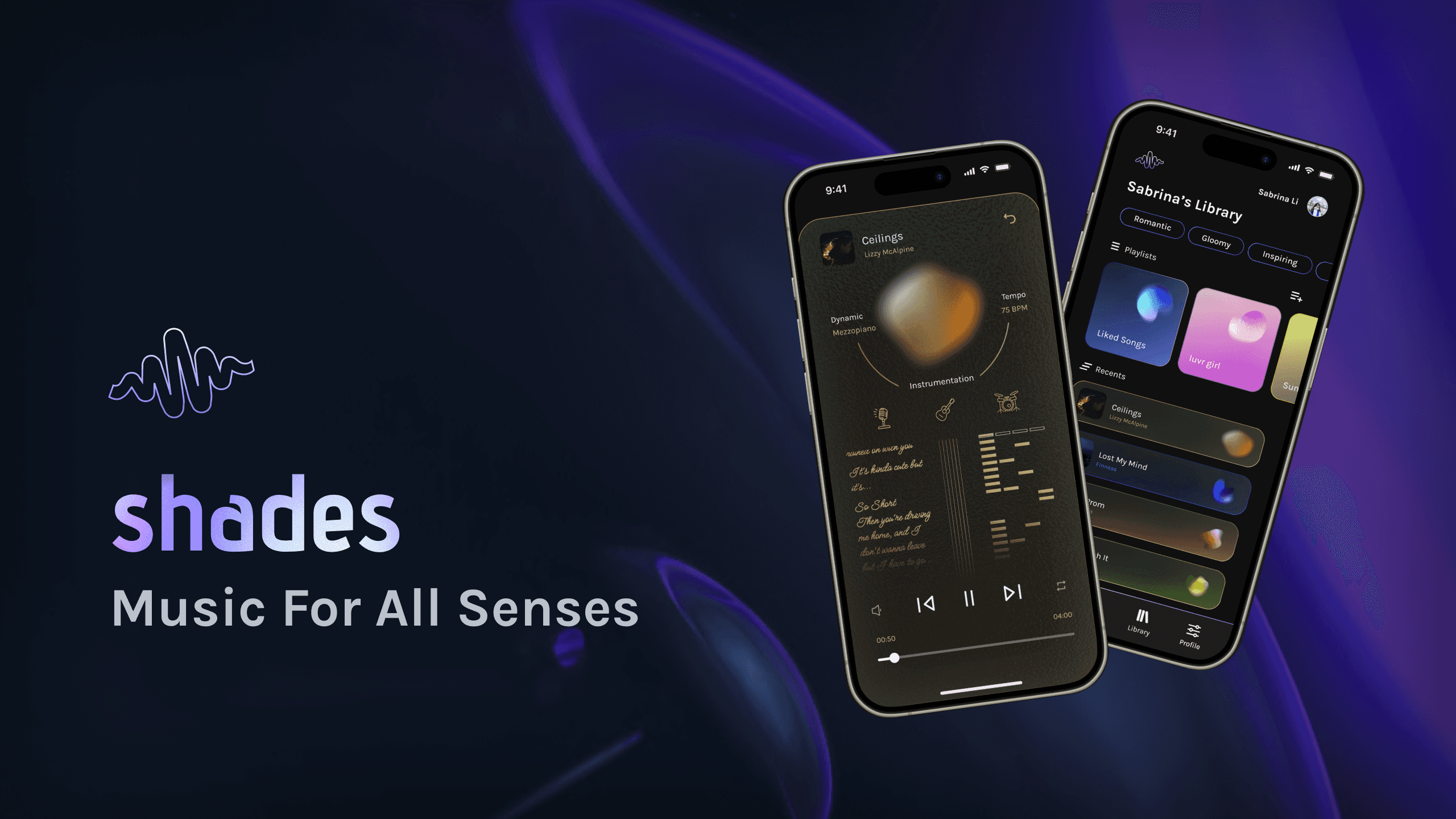
shades is a multi-sensory music streaming app that makes music accessible to users with hearing loss, auditory sensitivity, or sensory processing differences. Over 24 hours, my team designed a prototype that translates audio into customizable visual and tactile feedback, allowing users to experience music on their own terms.
the problem
Introducing shades.
OUR 24-HOUR ENCORE.


Explore + Curated Feed
Open to a personalized feed and filter by trending auras that match your mood.

Song Search
Quickly find songs by name, mood, or genre and see results with Aura previews to sense the vibe before pressing play.

Song Card
Each song card reveals the full sensory profile of a track. The aura reflects how the song feels, while genre tags and mood descriptors offer context to guide discovery.

Mood Filters
Explore songs based on their aura with mood filters to match music to how you’re feeling.
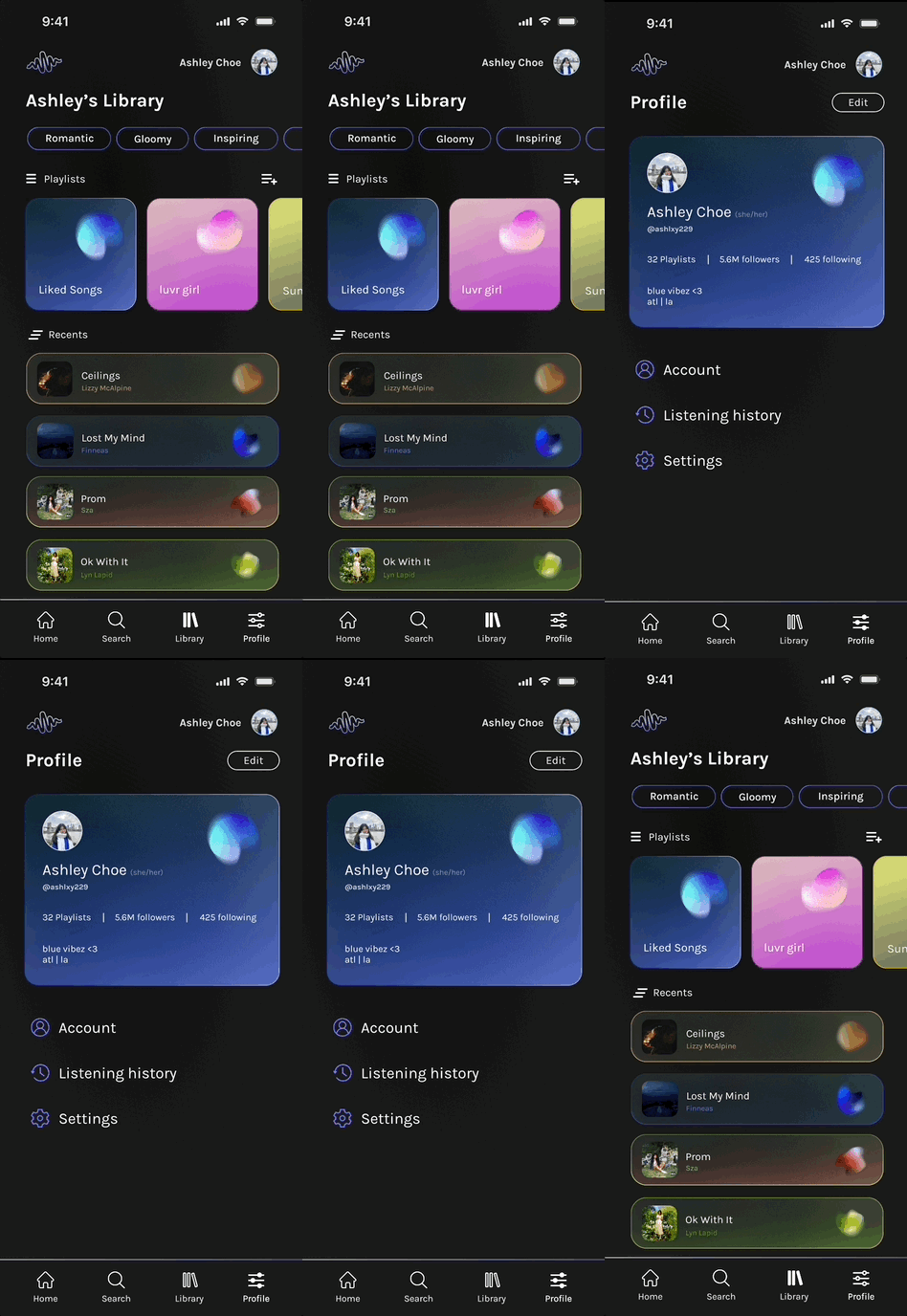
User Profile
See a snapshot of the energy you give off through your music, reflecting your listening style, mood, and personality.
key feature
Synesthesia-Inspired Visuals
To help users experience music beyond sound, we designed an immersive “aura” system—a dynamic color blob that visualizes the song’s emotion, tempo, and instrumentation. Supporting elements like rhythm-reactive bars and expressive lyrics create a multi-sensory song card that reflects how music feels, not just how it sounds.

Color as Emotion: Aura color shifts reflect mood and intensity of the song in real time
Visual Rhythm: Pulses and animations sync with tempo and dynamics to follow its musical flow
Expressive Typography: Lyrics are styled in fonts that reflect the tone of the song
Ideation
Information Architecture
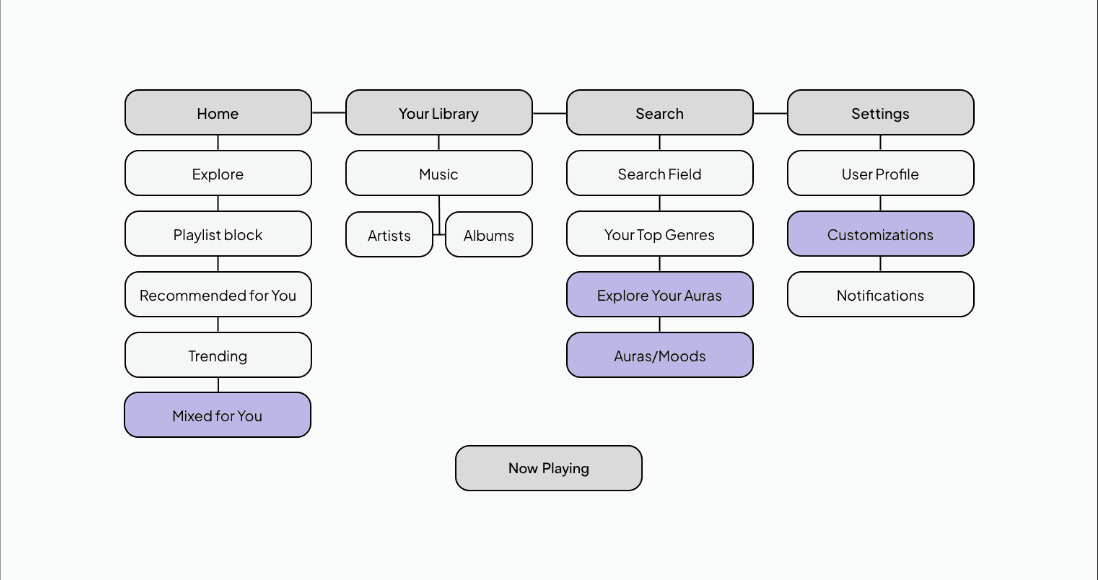
Creating this information architecture helped us validate that our design was truly user-focused, ensuring personalization was woven throughout the experience rather than added as an afterthought.
design process
Iteration
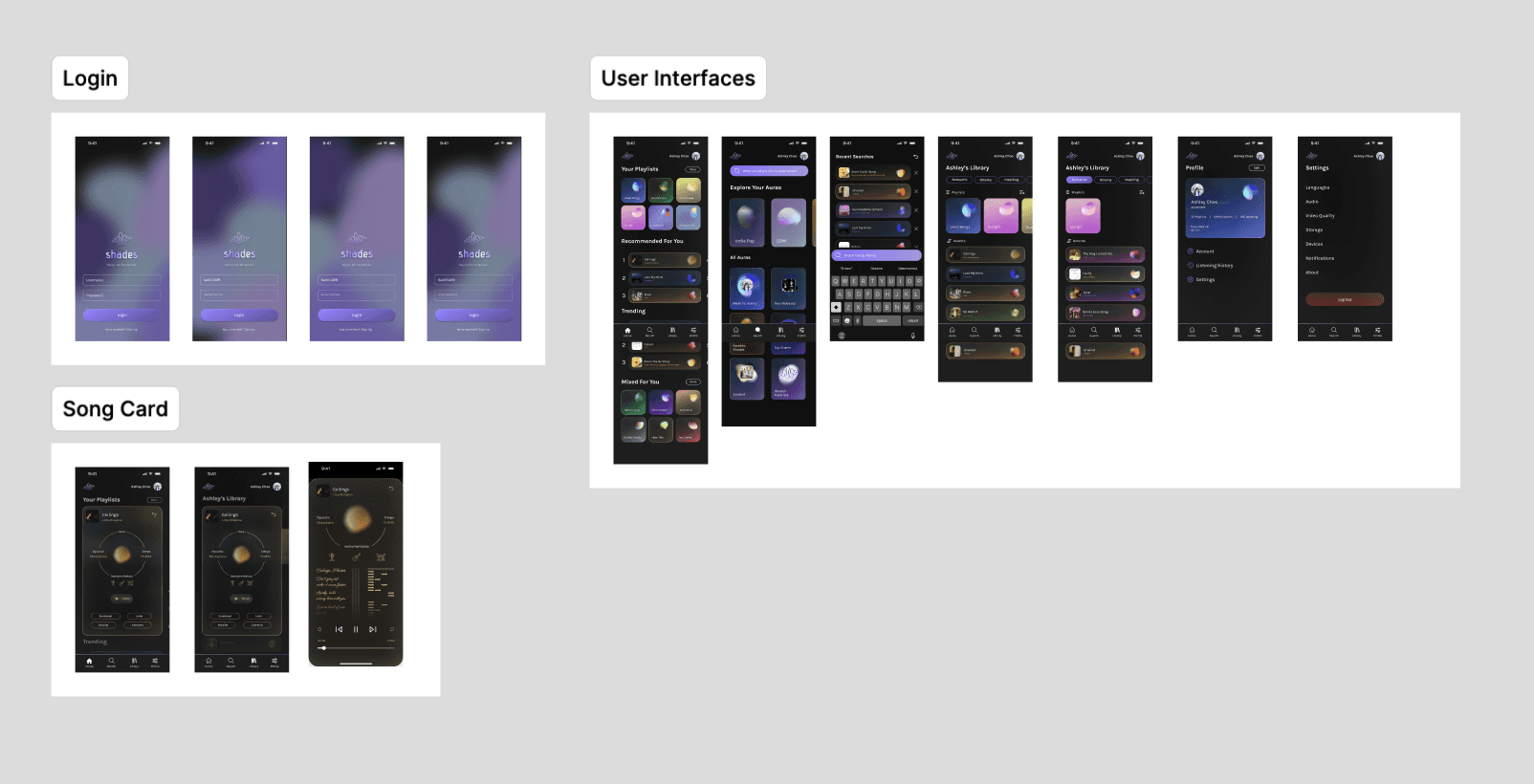
Creating this information architecture helped us validate that our design was truly user-focused, ensuring personalization was woven throughout the experience rather than added as an afterthought.
Hi-fi designs
Visual design & branding
future considerations
Bringing Shades to life in 24 hours meant making intentional trade-offs to build fast and focus on delivering a meaningful core experience. With positive feedback from early users and judges, we hope to map out new features guided by real feedback and unmet sensory needs.
Conduct targeted testing to refine our visuals, haptics, and interaction flows.
Potential partnerships with accessibility organizations to explore haptic integration.
AI-driven emotional and mood recognition to expand visual and haptic output.
Results
Impact and Recognition
Our team placed second overall among competing teams from across the U.S. at USC's CreateSC Designathon. The judges praised our approach of creating an accessible app for everyone while prioritizing inclusivity for people who are hard-of-hearing, our polished prototype, and our strong visual branding.
reflection
User-Focused Design
The app’s visual design was driven by uncovering user pain points and conducting user research to cater to both typical users and those with sound sensitivities. Shades pushed me to think beyond the obvious and rethink how music can be experienced. Design at its core is empathy.
Collaboration & Resilience
I couldn't have asked for a better team to stick it out with me through this incredible (and sleep-deprived) experience. We quickly developed a system to complement each other's strengths and remained resilient with a limited timeframe. Our diverse backgrounds and majors enriched our discussions and ideation process, while strong communication enabled us to synthesize our ideas effectively.

Available For Work
Made with <3 & running on a lot of caffeine
THANK YOU FOR VISITING.